 Singing Start Guide
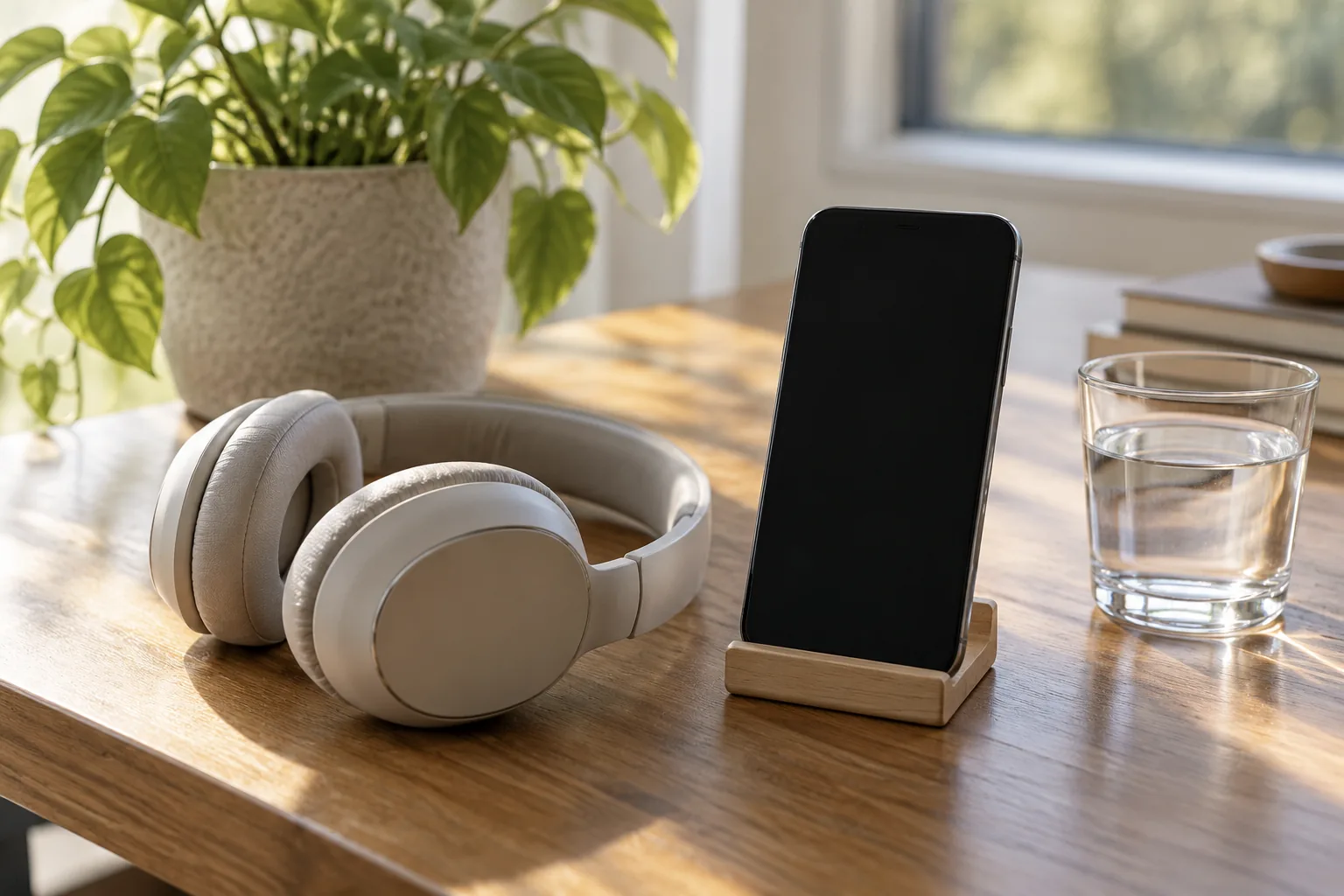
Headphones decide what you hear while you sing. Singorama’s 28 audio modules decide what you do about it, which is the part that eventually shows up in the take.
Affiliate link: we earn a commission if you buy, at no extra cost to you.
See what’s inside →Headphones are the most overlooked piece of a home vocal setup and the one that most directly affects how well you sing on the take. What you hear in your ears determines your pitch, your timing and how hard you push. Choosing headphones for recording vocals is not really an audio-quality question at all; it is a question about isolation, comfort and honesty, in that order.
This is guidance on how to choose rather than a measured shoot-out. There is one shopping link further down and it is an affiliate link, so we may earn a small commission at no extra cost to you. We have deliberately not named a single winning model, because the honest answer here is a category rather than a product.
Closed-back, and why it is not negotiable
Open-back headphones have a perforated outer shell. They sound more natural and spacious, they are more comfortable over long sessions, and mixing engineers love them. They also leak sound in both directions, which is precisely what you cannot have while recording.
The problem is bleed. Your backing track escapes the earcups, travels a few inches into a microphone that is pointed at your face, and gets recorded alongside your voice. On one quiet take you might not notice. Stack several takes together, or try to edit between phrases, and the leaked backing appears and disappears with every cut, which is unfixable and instantly marks a recording as amateur. Closed-back headphones seal against your head and keep the backing where it belongs.
The options, honestly compared
| Type | Bleed into the mic | Comfort for long sessions | Latency | Verdict for recording vocals |
|---|---|---|---|---|
| Closed-back over-ear | Low | Good, if the clamp is right | None | The correct choice |
| Open-back over-ear | High | Excellent | None | Great for listening, wrong for tracking |
| Wired in-ear earbuds | Very low | Fine in short bursts | None | Surprisingly good budget answer |
| Bluetooth headphones | Low | Good | Significant delay | Unusable for singing to a track |
| Noise-cancelling headphones | Low | Good | Small, plus altered tone | Workable, but they lie about the sound |
Names you will meet while shopping, listed as landmarks rather than as products we have tested against each other: the long-serving closed-back studio models from Audio-Technica, Sony, Sennheiser and Beyerdynamic that have been standard in project studios for years. Any of those families in the entry to mid price bracket will do this job. Prices move around, so check current listings rather than trusting a figure written in advance.
Browse closed-back studio headphones on Amazon →
What to look for beyond closed-back
- Modest impedance. High-impedance models need a proper headphone amp to reach usable volume. If you are plugging into a laptop or an entry-level interface, stay with the lower-impedance versions, which manufacturers usually sell alongside the high-impedance ones under the same name.
- Replaceable earpads. Pads are the first thing to fail and the thing that determines both comfort and isolation. Headphones with cheap replacements last a decade.
- A detachable or generously long cable. Standing up to sing while attached to a laptop by a short cable is a genuine daily annoyance.
- Weight and clamp. You will wear these for an hour while doing something physically demanding. A heavy, tight pair gives you a headache by take six, and a headache changes how you sing.
- Reasonably flat response. Bass-heavy consumer headphones make everything sound impressive, which is exactly wrong when you are trying to judge whether your take was good.
Monitoring your own voice
This is where most home singers struggle, and the fix is a technique rather than a purchase.
With both earcups sealed, you hear yourself mainly through the bones of your skull, which sounds nothing like your actual voice. Most singers respond by pushing, because their voice seems quiet and buried under the backing. The classic studio answer is to slide one earcup off, leaving one ear on the backing and the other in the room. Your loudness judgement returns immediately, and so does your pitch stability.
Two other adjustments make a large difference. Turn the backing track down; it should be quiet enough that you can hear your own voice acoustically over the top of it, because a loud backing is the main cause of over-singing at home. And use direct monitoring if your microphone or interface offers it, so your voice returns to your ears with no delay. Hearing yourself even a few tens of milliseconds late makes you sing behind the beat and hesitate on entries, and no amount of talent overcomes it.
If you find yourself straining under headphones, that is a signal worth respecting rather than pushing through. Read the signs of vocal strain and turn the backing down before you turn your voice up.
What we would actually use
If you own wired earbuds, use them and spend nothing. They isolate well, they leak almost nothing into the microphone, and the one-earbud-out trick works perfectly with them. When they become the limitation, move to a low-impedance closed-back studio pair in the entry to mid bracket, chosen mainly on comfort and replaceable pads rather than on frequency graphs. Skip anything wireless for tracking entirely; the delay is not a matter of taste, it simply makes singing in time impossible. Money left over goes toward technique, and a structured course such as Singorama ($67 one-off on the vendor’s page, checked 30 September 2026; we have not completed it, see our review) is one option for that.
Frequently Asked Questions
Can I record vocals without headphones?
Only if you are recording without a backing track, which is fine for exercises and acapella practice. With speakers playing a backing, the microphone records the backing too, and you can never separate the two afterwards.
Are expensive headphones better for recording vocals?
Not meaningfully, past the entry-to-mid bracket. What you gain with money is comfort, build quality and flatter response, which matter for mixing. For tracking, isolation and comfort are the whole story and both arrive early on the price curve.
Why do I sing flat with headphones on?
Usually because the backing is too loud and both ears are sealed, so you cannot hear yourself properly and stop supporting the note. Take one earcup off and turn the backing down. If the pitch problem persists without headphones, it is a technique issue rather than a monitoring one, and our guide to singing in tune covers it.
Do noise-cancelling headphones work for recording?
They will function if wired, but active cancellation alters the sound you are judging and can feel disorienting while singing. If they are wireless as well, the latency rules them out for tracking to a backing track regardless of anything else.
What to Read Next
- More recording and gear guides
- How to sing in tune
- Signs of vocal strain
- A practice routine that uses recordings
⚠️ Affiliate disclosure: As an Amazon Associate I earn from qualifying purchases. Some links in this article are affiliate links. If you buy through them we may earn a small commission at no extra cost to you — it never changes what we recommend. Read our full disclosure.