 Singing Start Guide
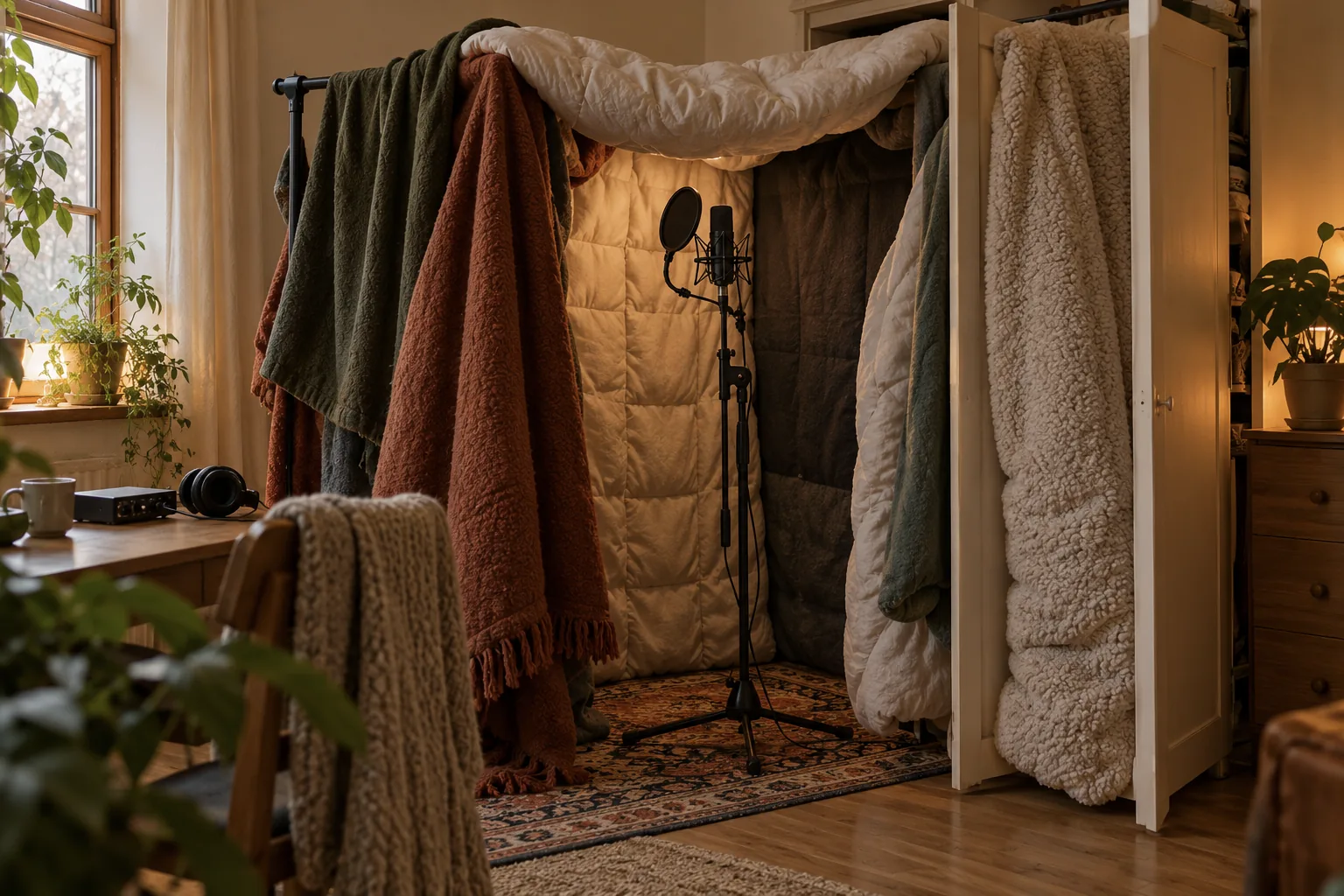
Thin walls, a flat share, a baby asleep down the hall, a 10pm start after work — practising singing quietly is not a niche problem. It is the default condition for most adult beginners, and it is the reason a lot of people practise twice a month instead of five times a week.
The good news is that a surprising amount of singing improves at low volume. The honest news is that some of it does not, and pretending otherwise leads to people who sound excellent in a bedroom and fall apart in a room with other humans in it.
What genuinely improves at low volume
- Pitch accuracy. Hitting the right note is a coordination and listening skill, and quiet singing is arguably better practice for it because you can hear a reference underneath yourself. Everything in how to sing in tune works at a whisper’s volume above nothing.
- Breath management. A long quiet phrase is harder to control than a loud one, not easier. Quiet singing exposes leaky, uneven airflow immediately, which makes it excellent breath support practice.
- Learning the notes and words of a song. Pure memory work. Volume is irrelevant.
- Rhythm and timing. Also entirely volume-independent.
- Vowel shapes and diction. You can feel your tongue and jaw perfectly well at low volume.
- Smoothing your break. Quiet is actually the recommended volume for this. Sirens and slides are supposed to be soft.
What you cannot fix quietly
Three things, and it is worth being blunt about them.
Power and projection. Singing loudly with a free throat is its own skill, and it needs to be practised loudly. There is no quiet exercise that builds it. If you only ever practise softly, your first loud rehearsal will feel alien.
Belting and high sustained notes. These live at volume by definition. Attempting them quietly usually means squeezing instead of supporting, which builds a habit you will later have to unlearn.
Stamina. Getting through a forty-minute set without fading is a conditioning thing. Twenty quiet minutes does not prepare you for it.
The workaround is not to solve these at home. It is to do quiet work five days a week and find one loud session a week somewhere else, which is a far more achievable ask than a soundproof room.
A quiet session that still counts
| Minutes | What to do | Volume |
|---|---|---|
| 0–3 | Humming, then hummed sirens | Barely audible from a metre away |
| 3–6 | Lip trills on five-note patterns | Quiet; the flutter carries less than a vowel |
| 6–12 | Sing your song on “oo” against a backing track in headphones | Conversational |
| 12–20 | Words, half volume, one phrase at a time | Conversational |
| 20–25 | Breath exercises with no sound at all | Silent |
That is twenty-five minutes in which a neighbour hears a low murmur and you have still done real work. The silent breath section at the end is not filler — long controlled exhales on “sss” and “fff” are genuinely useful and make no noise anyone can hear.
Where to find volume when you need it
- The car, parked. The most reliable rehearsal room most people own. Engine off, windows up, nobody within earshot.
- Rehearsal rooms by the hour. In most towns these cost less than a couple of coffees for an hour and nobody cares what you sound like.
- Outdoors, with wind or traffic. A windy field or a walk beside a busy road absorbs far more than you would expect.
- The house between about 11am and 4pm on a weekday, when flats tend to be empty. Ten loud minutes then beats an hour of frustration at midnight.
- Community choirs. Two hours a week of singing at full volume in a room where everyone else is louder than you.
Things that help, and one myth
Closed-back headphones with a backing track keep you from raising your volume to compete with a speaker, which is the single most common reason quiet practice creeps loud. A cheap dynamic microphone into a phone or interface lets you sing softly and hear yourself clearly at a normal listening level, which changes how quiet you are willing to go — we cover that kit in the recording and gear section.
The myth: singing into a pillow or a duvet. It muffles you a bit, it also removes all the acoustic feedback you need to judge your own sound, and it encourages you to push harder to hear yourself. Skip it.
The single biggest quiet-practice upgrade: something that shows you your pitch on screen. When you sing softly you can hear yourself less well than you think, and the temptation is to get louder just to check you are in tune. A pitch display removes that reason entirely — you look instead of listening, and your volume can stay right down. Plenty of the tools in our best singing apps round-up do this, and several of the free options handle the basic pitch line perfectly well. For anyone practising late at night, that visual feedback is worth more than any piece of gear.
Frequently Asked Questions
Is singing quietly bad for your voice?
Not in itself. Quiet singing with good airflow is gentle and sustainable. The risk is the wrong kind of quiet — squeezing your throat to keep the volume down while still trying to produce a big sound. That feels tight and effortful, and it is the version to avoid. Quiet should feel easier than normal, never harder.
Can I learn to sing entirely at low volume?
You can get a long way — pitch, breath, phrasing, repertoire, musicianship. What you will not build is projection, belt or stamina. Most people manage this by doing the daily work quietly and finding one louder session a week in a car, a rehearsal room or a choir.
Do soundproofing products actually work in a rented flat?
Foam panels and blankets change how a room sounds inside; they do very little to stop sound passing through a wall, which needs mass and separation you cannot install in a rental. Save the money. Timing your loud practice for when the building is empty is far more effective and costs nothing.
What about whisper singing?
Avoid it. Whispering makes your vocal folds work in an unhelpful, dry, effortful way and it is not a quieter form of singing — it is a different and less pleasant activity. If you need to be nearly silent, hum or do silent breath work instead.
What to Read Next
- Breath support for singing — the skill quiet practice is best at building.
- Teach yourself to sing — structuring solo work, in how to learn singing.
- Best singing apps — pitch feedback so you never need to sing louder to check.
- Free singing apps — the no-cost versions of the same idea.